

Women & Work – The undercurrents of February 2026
News, research and data about women and work - curated by our team

Hello, and welcome to CEDA’s newsletter ‘Women & Work’!

February has a way of dressing itself in roses and neat declarations. But beyond Rose Day and Promise Day, beyond the red hearts and polished words, there’s a quieter truth: commitment is proven over time. At Women and Work, we’re thinking about what it really means to stand by women’s ambition- not with slogans, but with action. In hiring decisions. In pay structures. In who gets heard in the room. This month, we’re looking at the difference between gestures and guarantees, between celebration and change. Because real support isn’t seasonal- it’s sustained.
Before we get started, a request: We are curating ‘Women & Work’ with the hope that it can provoke, stimulate and amplify conversations about women’s participation in paid work in India. If you like this edition, please do share it on your social media, and with your friends, family and colleagues. Thank you.
In case you would like to read any of our past editions, they are available here.

🗞️ In The News
Behind the promise of “smart” AI are women scrolling through the internet’s darkest corners- violence, abuse, exploitation- so machines can learn what to block. A report uncovers how Indian women moderators sift through graphic violence, abuse and exploitation to train AI systems- often from their homes, for modest pay, and with minimal psychological support. The toll is heavy: anxiety, insomnia, emotional numbing and lasting trauma that doesn’t log off at the end of a shift. As AI advances, a deeper question lingers: who is protecting the women whose invisible labour protects the internet?
In the frozen heights of Himachal Pradesh’s Spiti Valley, local women have turned rugged mountain slopes into their workplace, spending long, harsh days setting camera traps and collecting data to save the elusive snow leopard- all while carving out economic roles in communities with few options. Their conservation work blends traditional knowledge with science, elevating women from the margins into leadership, yet they often labour in extreme cold with limited support or pay. This BBC story shows how women’s work can reshape both ecosystems and gender norms.
Three working women from Arunachal Pradesh were reportedly subjected to racialised and sexist slurs in a south Delhi neighbourhood- abuse that targeted both their gender and their regional identity. Such incidents reveal how intersectional prejudice follows many Northeastern women into the cities they move to for work and opportunity. When ethnicity and misogyny collide, even everyday spaces like housing become sites of exclusion.
Trigger warning: This item references sexual exploitation and abuse.
The release of the Epstein files: thousands of pages of court records, testimonies and flight logs- further exposes how a trafficking network targeting girls and young women operated within powerful social and professional circles. The material reveals patterns of complicity, silence and institutional failure. We stand with survivors and acknowledge the courage it takes to speak. Read more in the full report, which carefully triangulates the documents and evidence to provide clarity amid the scale of information.

💡 Research Spotlight
🚶♀️Working the route before working the role
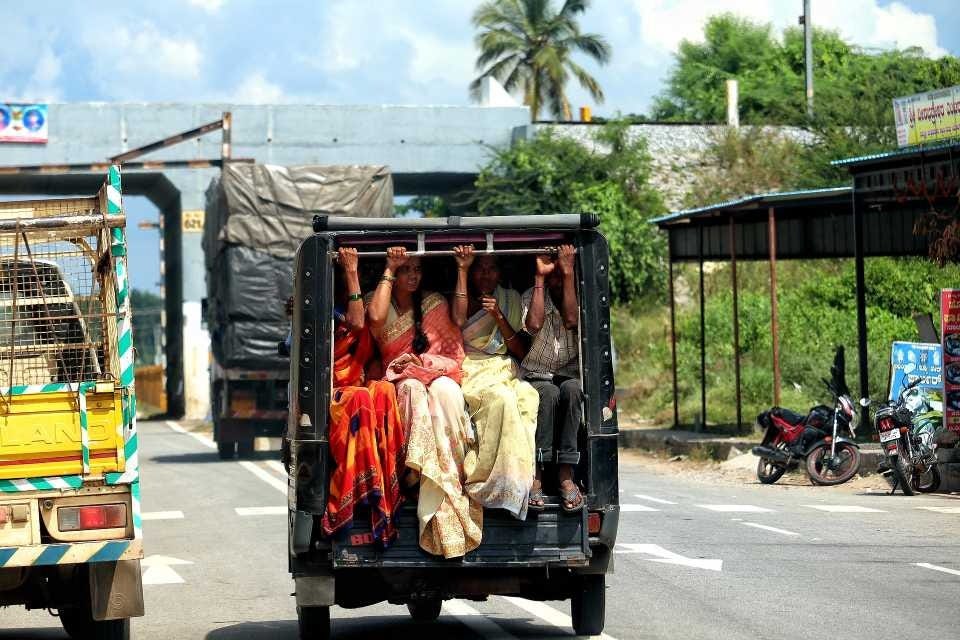
Before she clocks in, she has already worked. She has chosen the safest route, timed her walk to match the bus, avoided dimly lit stretches, and calculated whether waiting longer might mean a less crowded coach. A 2024 study in the Journal of Public Transportation makes this invisible labour visible by auditing 45 complete public transport journeys taken by women across Delhi, spanning low-, middle-, and high-income groups. Rather than asking women how satisfied they felt, researchers conducted structured, on-ground evaluations of entire travel chains- tracing each step from home to destination.
They systematically recorded time spent at each stage of the journey, the quality of infrastructure such as lighting, pavements, and road crossings, safety concerns encountered along the way, the number of mode changes and transfer points, and the informal adaptations women made to manage risk. By following journeys instead of opinions, the study reveals commuting as cognitive, emotional, and physical labour performed before paid work even begins- reminding us that access to employment starts not at the workplace door, but on the street outside home.
🔎 Findings:
A commute is not a ride, it is a chain: Across 45 audited journeys, women’s travel consisted of walking, waiting, transferring and switching modes- each segment carrying its own time cost, financial burden and safety risk. The metro ride was often the shortest and easiest part; reaching it was the real journey.
Inequality begins at the first mile and deepens at every transfer: For many low-income women, the stretch from home to the first bus stop or station was the most difficult. It was marked by poor lighting, broken pavements and unsafe crossings. Most journeys involved two or more transfers, and each interchange added waiting time, coordination stress and exposure to poorly designed, crowded nodes.
Time inequality compounds economic inequality: Lower-income commuters routinely spent 30 to 90 additional minutes per day in transit compared to higher-income counterparts, translating into 5–7 extra hours per week before paid work even began. Time lost to infrastructure gaps translated directly into reduced rest, caregiving flexibility and economic opportunity.
Safety overruled efficiency, and adaptation was constant: Women chose longer but busier routes, left home earlier to avoid darkness, switched modes mid-trip, and relied on informal transport when formal systems failed. The fastest route was rarely chosen; the safest was. These were not occasional adjustments but routine survival strategies.
Class shaped options, not exposure. Risk was universal, but insulation from it was not. Higher-income women could substitute unsafe segments with paid alternatives. Lower-income women absorbed the full burden of inadequate infrastructure.
For working women, the commute quietly redraws the map of possibility. When every job offer is filtered through questions of safety, distance, lighting, and late-evening returns, ambition is forced to negotiate with infrastructure. A promotion that requires a longer route, a shift that ends after dark, a workplace two transfers away- these are not neutral choices but calculated risks. Over time, such calculations shape where women apply, what roles they accept, how long they stay, and whether they remain in the workforce at all. Earnings, mobility across sectors, and career growth become tethered not just to talent, but to transport design. The result is a powerful reframing: mobility is not just movement; it is gendered negotiation.
📊 Datapoint
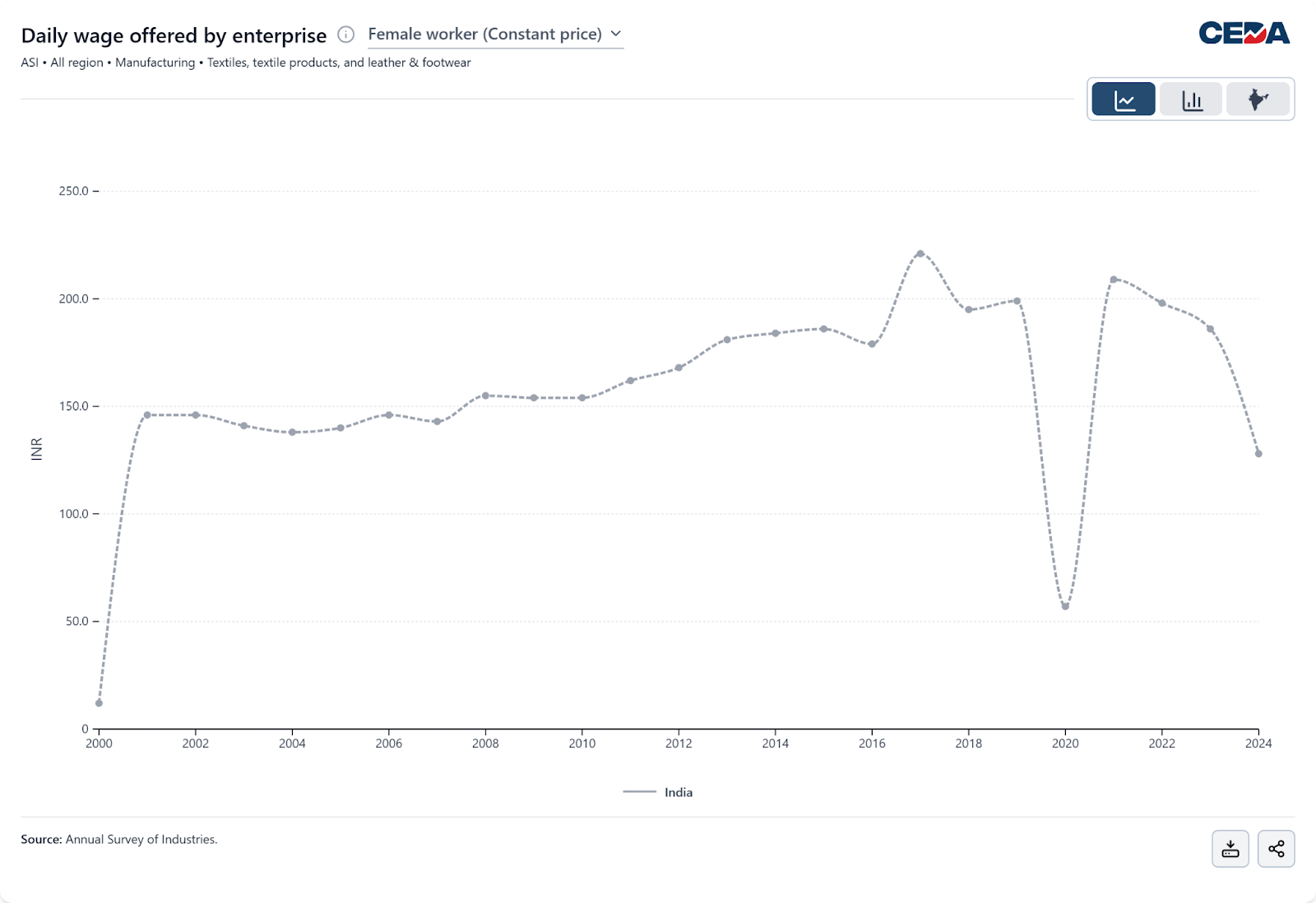
In India’s textile and footwear factories, the rhythm of work is measured not just in metres of cloth or pairs of shoes, but in the real wages earned by women on the shop floor. For decades, these industries have been among the most accessible gateways into paid employment for women, anchoring them within the country’s manufacturing economy. Data from the Annual Survey of Industries, visualised on CEDA’s Economic Enterprise Trackers, traces how this earning power has changed over time. In constant prices- adjusted for inflation to reflect real purchasing power- the average daily wage for women rose from ₹12 in 2000 to a peak of ₹221 in 2017, with gains broadly sustained through 2018-19. The pandemic marked a decisive rupture. Real wages collapsed to ₹57 in 2020, rebounded in 2021 as activity resumed, but have trended downward again since 2022. By 2024, at ₹128, they remain roughly 36% below their pre-pandemic level in 2019. The post-pandemic phase points not just to temporary volatility, but to a meaningful setback in women’s real earnings in these sectors.
CEDA has launched Economic Enterprises Data Tracker, a new tool that brings India’s formal and informal enterprises into a single, comparable view. Drawing on ASI, ASUSE, and earlier NSS rounds, it standardises key indicators on investment, productivity, credit, employment, and enterprise characteristics. Users can explore each survey separately or compare trends across sectors using harmonised data. With interactive charts, state-level insights, and downloadable datasets, the tracker provides a clearer, consolidated view of India’s enterprise economy for research and policy use.
⏳ Throwback
The Original “Let’s Grab Coffee”

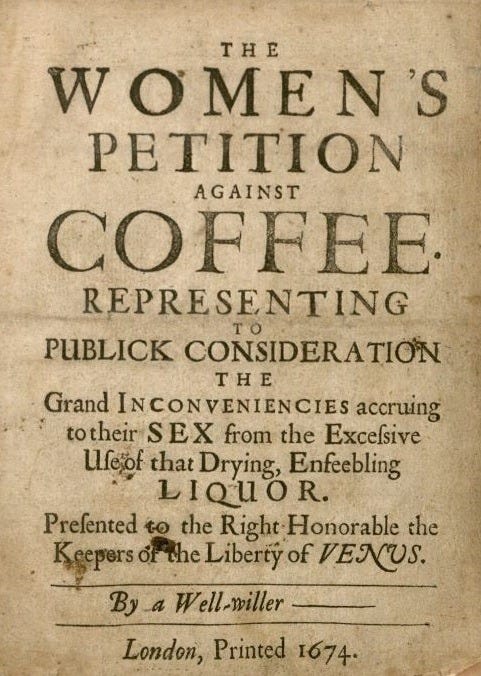
In 1674, a satirical pamphlet titled The Women’s Petition Against Coffee complained that men were wasting their time and household money in coffee houses. The petition mocked coffee for draining men’s vitality, but beneath the humour was something sharper: resentment at being excluded from the rooms where men gathered, debated, and consolidated influence.
Those 17th-century coffee houses were not charming cafés. They were financial engines. For one penny, a man could enter these buzzing coffee houses, nicknamed penny universities, and gain access to news, markets and influence. Lloyd’s of London was born in one. The roots of the London Stock Exchange trace back to another. Women were largely absent. There were no official bans. Instead, cultural codes did the work of exclusion. Coffee houses were associated with politics, finance and risk- domains coded male. A “respectable” woman entering such a space risked reputational damage. And reputation was economic currency. Without it, employment, marriage prospects, and social mobility narrowed. They laboured in the economy but were barred from the networks that shaped it.
In 1674, The Women’s Petition Against Coffee mocked the drink for weakening husbands and draining household money. Satirical as it was, the pamphlet revealed something deeper: frustration at being shut out of spaces where time, capital, and influence converged. The grievance wasn’t really about caffeine. It was about access.
The venue has changed. Today it might be golf outings where executives soften hierarchy, private investor dinners, tech “man caves,” or LinkedIn backchannels humming before job postings go public. Promotions, funding, and leadership often crystallise in informal settings before they are formalised on paper. The lesson of the penny university is stark: work has never been only about employment. It has been about entry into rooms, conversations, and circles where leverage compounds. When women are absent from those spaces, inequality does not need a policy. It sustains itself through invitation.
📽️ Lights, Camera, Hustle: Women’s Work Lives in Movies
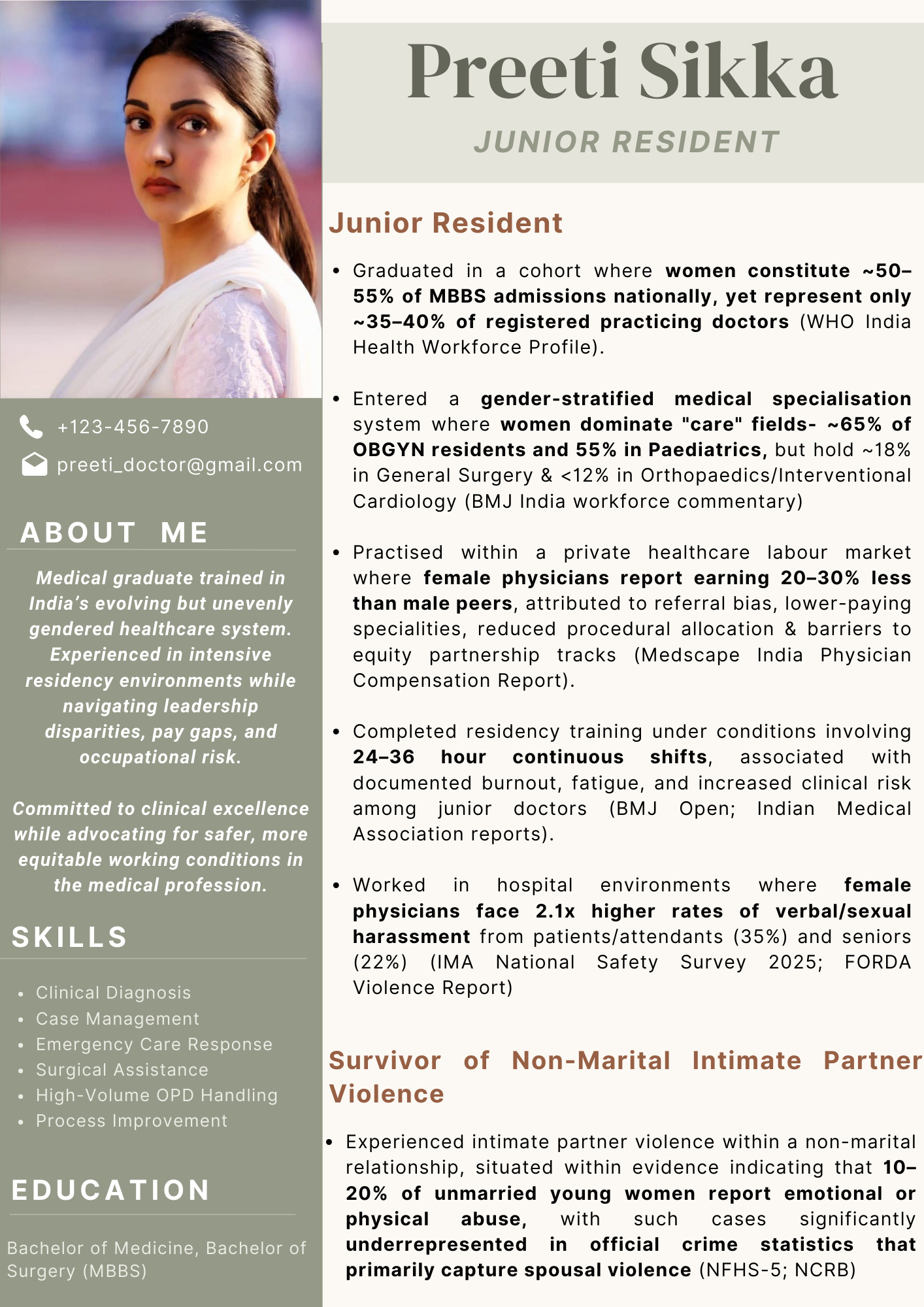
This fictional CV is a creative work inspired by the character Preeti, as depicted in the film Kabir Singh (2019). All names and references are respectfully credited to the series’ original creators, filmmakers, and rights holders.
Thank you for reading! If you have feedback, questions, tips, or just want to say hello, feel free to do so by replying to this email, or drop in a word at editorial.ceda@ashoka.edu.in
For more updates and conversations, be sure to follow us on LinkedIn and X. We look forward to staying connected with you!
Curated by: Sneha Mariam Thomas for the Centre for Economic Data & Analysis (CEDA), Ashoka University. Cover illustration: Nithya Subramanian